

Thrips are among the tiniest insects on earth, so small that most people never notice them at all. About the size of a grain of rice, these slender little bugs live all over the world, feeding on plants and flowers. Gardeners know them as pests, but spiritually, the thrip carries a surprising message. The spiritual meaning of the thrip is about attention to detail, the power of small things, and persistence.
It is easy to dismiss what is small. The thrip teaches us not to. In the spiritual life, as in the garden, tiny things often make the biggest difference, and what we overlook is often what matters most.
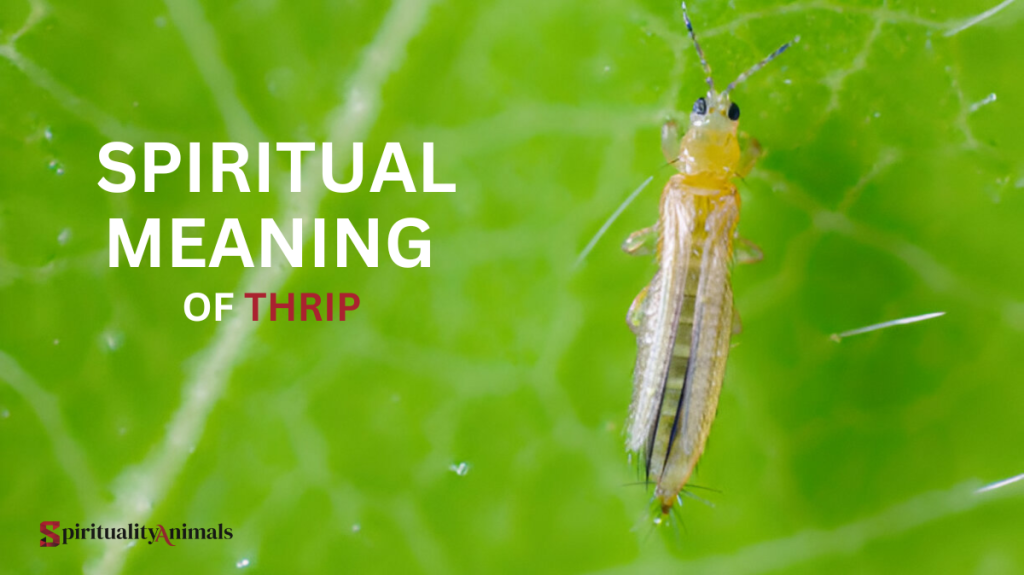
Brief Answer on Spiritual Meaning of Thrip
The spiritual meaning of the thrip centers on details, attentiveness, and the significance of small things. The thrip reminds us that tiny actions, minor habits, and overlooked details shape our lives more than we realize. It also teaches persistence: small, steady pressure can affect even the largest plants, and the smallest efforts can move the biggest outcomes.
Thrip Symbolism and Meaning
Attention to detail is the thrip’s primary teaching. Thrips operate at a scale most creatures ignore, finding nourishment in the fine structures of flowers and leaves. Spiritually, the thrip asks: what details in your life are you overlooking? Often it is the small things, a kind word, a daily habit, a minor repair, that determine the health of the whole.
The power of small things runs through thrip symbolism. We tend to believe that only big actions matter, but the thrip proves otherwise. A tiny insect can damage a whole crop; by the same token, tiny kindnesses can transform a relationship and small disciplines can reshape a life. The thrip dignifies the small.
Persistence is another thrip lesson. Thrips are famously hard to eliminate precisely because they are small, numerous, and relentless. As a symbol, this persistence can be read two ways. Positively, it encourages us to keep at what matters even when progress is invisible. Negatively, it warns that small irritations, left unaddressed, multiply and become serious.
Humility belongs to the thrip as well. This is not a glamorous creature. It has no beautiful wings like the butterfly, no song like the cricket. Yet it has its place in the web of life. The thrip teaches that worth is not measured by visibility or applause, and that humble, unseen roles are essential.
Vulnerability is part of the picture too. Thrips are fragile, easily crushed, at the mercy of weather and predators. Spiritually, they remind us to be gentle with the fragile parts of ourselves and others, the tender new growth that needs protection, not pressure.
Thrip as a Spirit, Totem, and Power Animal
If the thrip is your spirit animal, you are likely detail-oriented, observant, and patient, someone who notices what others miss. Thrip people often excel at careful, precise work and have a gift for tending the small things that keep larger systems healthy. You may need to guard against getting lost in minutiae or letting small worries grow large.
As a totem, the thrip supports craftsmanship, careful planning, and mindful daily practice. It is a good companion for editors, gardeners, healers, and anyone whose work depends on precision. Call on thrip energy when you need to focus, refine, or attend lovingly to details.
As a power animal, the thrip lends quiet persistence. It helps you keep going with small daily actions when big motivation fades. Thrip medicine says: do not despise small beginnings or small steps; they are how everything lasting gets built.
Spiritual Meaning of Seeing Thrips
Noticing thrips, perhaps on your plants or flowers, is often read as a nudge about details. Something small in your life needs attention: a minor health symptom, a small crack in a relationship, a detail in your work you have been glossing over. The thrip says look closer.
A thrip infestation in the garden, while frustrating, can carry a stronger message about multiplication. Small problems ignored become big problems. The spiritual advice is practical: deal with little issues while they are little, in your garden and in your life.
Because thrips are so easily overlooked, simply noticing them can itself be meaningful. It may signal that your awareness is sharpening, that you are beginning to perceive the subtle layers of life that most people miss. That growing attentiveness is a spiritual gift.
Thrip in Dreams
Dreaming of thrips or tiny insects often points to small anxieties or irritations accumulating in waking life. The dream may be telling you that minor issues, each insignificant alone, are adding up to real stress. Address them one by one.
A dream of thrips on plants can symbolize worry about something you are nurturing, a project, a relationship, a garden, that feels vulnerable to small threats. The dream encourages protective, attentive care rather than panic.
Positively, dreaming of observing tiny insects with fascination can represent growing mindfulness and appreciation for life’s small wonders. It suggests a deepening ability to find meaning in the minute and the overlooked.
FAQ
What does the thrip symbolize spiritually?
Attention to detail, the power of small things, persistence, and humility. The thrip teaches that tiny actions and overlooked details shape outcomes more than we realize.
Is seeing thrips a bad sign?
Not exactly. It is more of a practical nudge: pay attention to small details and address minor issues before they grow. In the garden it means check your plants; in life it means check the details.
What does dreaming of tiny insects mean?
It often reflects small worries accumulating, or a call to greater mindfulness. The dream usually advises tending to little things with care rather than ignoring them.
Why would such a tiny bug have spiritual meaning?
Because spiritual meaning is not measured by size. Many traditions teach that the smallest creatures carry the subtlest wisdom, and the thrip exemplifies this perfectly.
The thrip’s message is quiet but profound: pay attention. Tend the small things, persist in tiny faithfulness, and never underestimate what is minute. In the garden of your life, as in nature, it is often the smallest creatures that teach the greatest lessons.